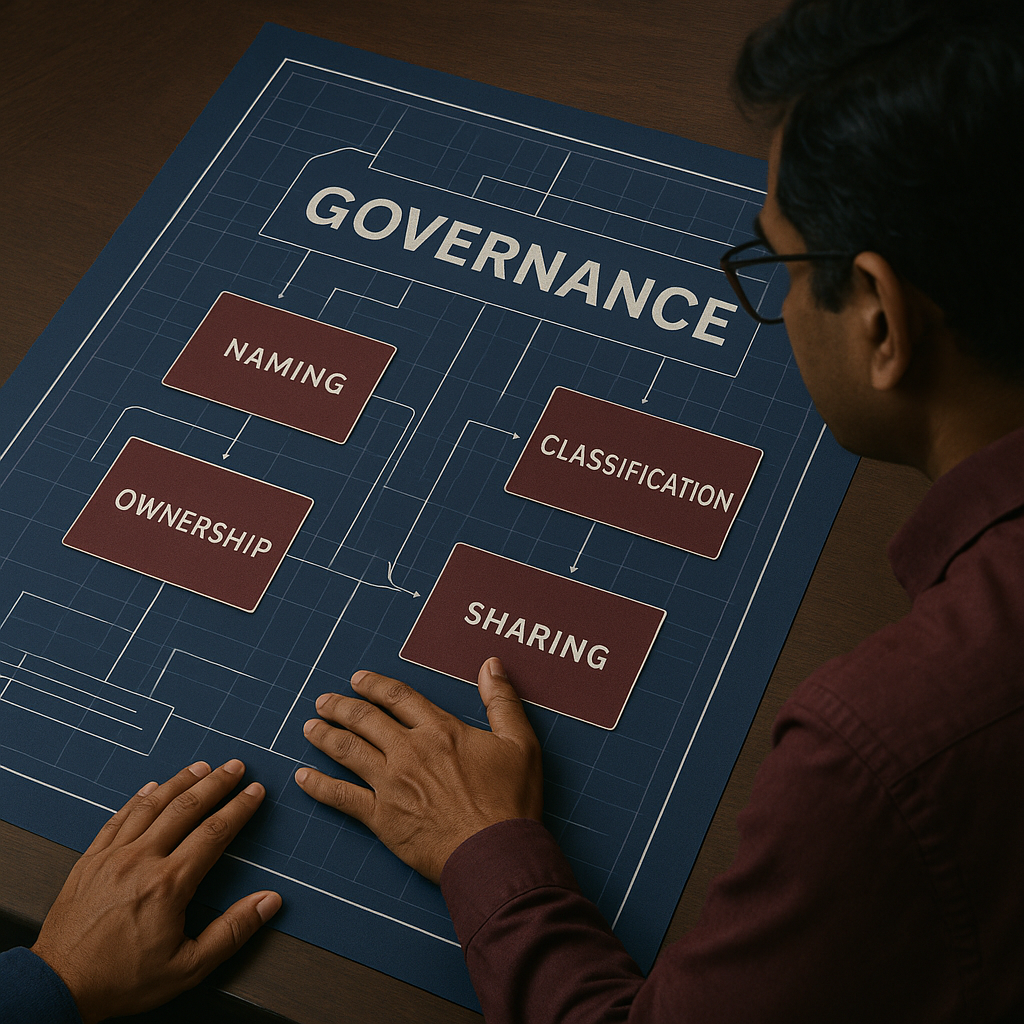
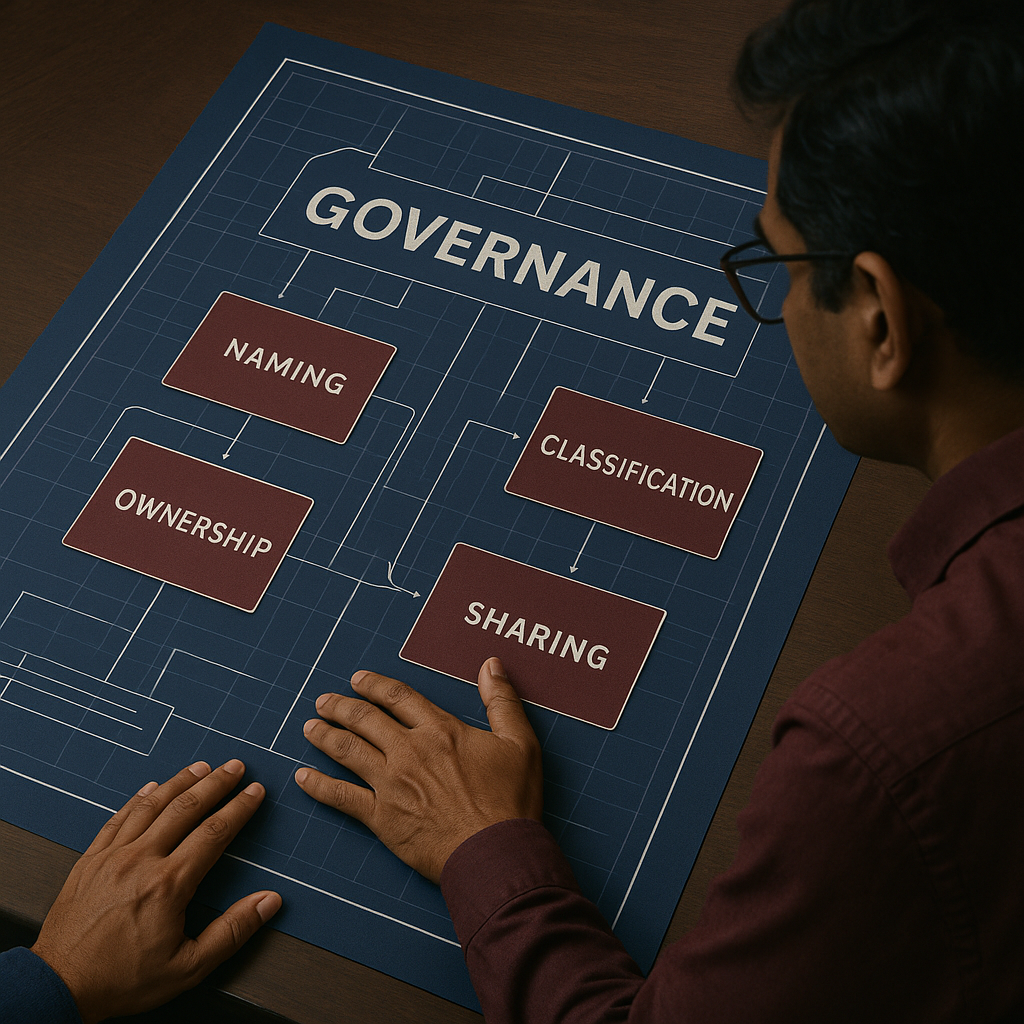
ECM governance framework 2026: define naming conventions, classification policy, document ownership, sharing rules, and audit trail requirements — all in one enforceable operating model.
In 2026, ECM governance is no longer a "compliance project" that lives in a document. It's a living operating model that determines how fast teams can collaborate, how confidently auditors can validate evidence, and how safely information can be shared across borders and business units. For enterprise leaders in India and global markets, the difference between a productive digital workplace and a risky content sprawl often comes down to a few enforceable policies: a strong classification policy, consistent naming conventions, clear document ownership, and unambiguous sharing rules—all backed by an immutable audit trail within your enterprise content management platform.
This post outlines a practical framework you can implement and govern—whether you're consolidating shared drives, scaling Teams/SharePoint usage, modernizing quality documentation, or standardizing content workflows across plants, branches, and geographies.
Why ECM Governance Matters More in 2026
The modern enterprise runs on distributed execution: hybrid work, partner ecosystems, outsourced operations, and multi-entity compliance. That complexity increases the need for ECM governance that is measurable and enforceable. Regulations and frameworks vary by industry, but the operational expectations converge: controlled access, consistent structure, evidence-ready records, and accountability.
Mature enterprise content management practices reduce cycle times (fewer rework loops), improve audit readiness (faster evidence retrieval), and lower risk (fewer accidental exposures). The key is translating governance into day-to-day behaviors supported by system controls—especially around classification policy, naming conventions, document ownership, sharing rules, and audit trail integrity.
A 2026 ECM Governance Framework: The 5 Policy Pillars
1) Classification Policy: Make Sensitivity and Retention Explicit
A strong classification policy is the foundation of scalable governance. It should be simple enough for business users to apply, yet structured enough for compliance and security teams to enforce. In practice, aim for 4–6 tiers (e.g., Public, Internal, Confidential, Restricted) and map each to access constraints, retention periods, and approved sharing channels.
| Tier | Access | External Sharing | Retention |
|---|---|---|---|
| Public | All staff + external | Freely allowed | As required |
| Internal | All employees | With approval | 3 years |
| Confidential | Need-to-know only | Controlled link / guest access | 7 years |
| Restricted | Named individuals | Prohibited | Permanent / regulatory |
Use your enterprise content management system to apply classification at creation (templates and metadata), and automate controls such as external sharing restrictions for Restricted content. When implemented well, the classification policy also strengthens your audit trail by making "what kind of document is this?" provable—not guesswork.
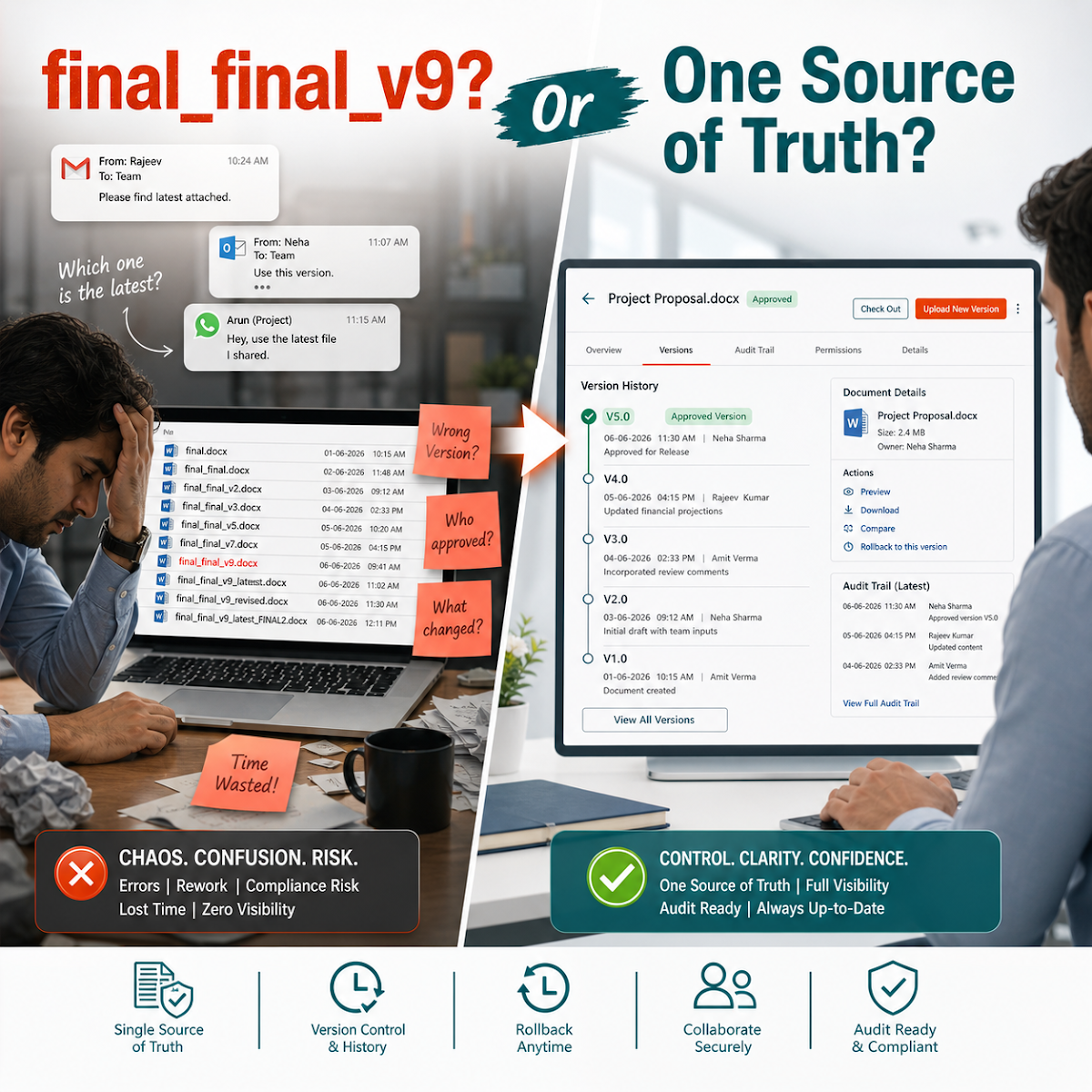
2) Naming Conventions: Reduce Search Time and Prevent Duplicate "Final_Final" Files
Good naming conventions are a productivity multiplier. They reduce duplicate creation, enable predictable retrieval, and support integrations with records and workflow tools. The most effective naming standards are:
- Short — avoid 180-character file names that break sync or exports
- Structured — e.g., BU-Process-DocType-UniqueID-Version-Date
- Machine-friendly — avoid special characters and inconsistent date formats
Crucially, naming conventions must be enforceable. If they live only in a PDF guideline, adoption will decay. Configure your enterprise content management platform to auto-generate names based on metadata, while maintaining human readability. This also strengthens the audit trail because versions can be traced without ambiguity.
3) Document Ownership: Define Accountability, Not Just Access
Clear document ownership is what turns governance into an operating rhythm. Owners are not simply the people who uploaded a file; they are accountable for accuracy, lifecycle actions, and review schedules. A practical model includes:
- Business Owner — accountable for content correctness and approvals
- Custodian — manages structure, metadata, and access implementation
- Compliance Reviewer (where applicable) — validates policy alignment and evidence readiness
Ensure your enterprise content management solution captures ownership as a required attribute. Link document ownership to automated review reminders, deprecation workflows, and escalation rules when owners change roles. This reduces "orphan documents" and keeps the audit trail reliable over time.
If you're formalizing these controls, the governance and compliance features described here can help align stakeholders and system settings: governance and compliance capabilities.
Formalizing governance across your content repositories?
ShareDocs Enterpriser enforces classification, ownership, and audit trails out of the box — deployed in 3 days on cloud.
4) Sharing Rules: Make Collaboration Safe by Default
Most incidents happen through "normal work": forwarding a link to a vendor, using personal email, or granting broad access "just for today." Strong sharing rules remove ambiguity. Define:
- When external sharing is allowed (by classification tier)
- Approved channels (guest access vs. secure link vs. controlled download)
- Time-bound access and review requirements
- Prohibited behaviors (public links, personal storage, uncontrolled exports)
For regulated functions (finance, pharma, manufacturing quality, BFSI), combine sharing rules with watermarking, download restrictions, and periodic access reviews. And ensure every share action is recorded with a complete audit trail, including who shared, with whom, and what permissions were granted.
5) Audit Trail: Treat Evidence as a First-Class Output
A trustworthy audit trail is not just "logging turned on." It should capture document lifecycle events end-to-end: creation, classification changes, permission updates, edits, versioning, approvals, and external sharing. In audits, speed matters: can you retrieve the full history for a specific record in minutes, not days?
Your enterprise content management approach should define:
- Which events must be logged for each classification tier
- Retention of logs aligned with your classification policy
- Who can view logs and under what circumstances
- How logs are exported for investigations
Implementation Playbook: From Policy to Adoption
Governance succeeds when it is staged, measurable, and co-owned. Here's a pragmatic rollout pattern used by global enterprises and fast-scaling Indian organizations:
- Start with high-risk content domains (contracts, HR, finance, quality) and apply classification policy + sharing rules first.
- Define a minimum viable standard for naming conventions and auto-enforce it via metadata rules.
- Assign document ownership for top repositories; resolve "owner unknown" items as a cleanup sprint.
- Measure adoption: % classified, % with owners, external shares by tier, and audit trail completeness.
- Expand coverage to remaining departments once defaults are working.
If you're evaluating platforms or modernizing your content stack, it helps to review how an enterprise document management system supports policy enforcement (not just storage), especially around document ownership workflows and governed collaboration.
Common Pitfalls to Avoid
Over-engineering the taxonomy
A complex classification policy and overly detailed metadata model can slow adoption. Keep it simple, enforce defaults, and iterate based on usage analytics.
Policies without product controls
If users can bypass sharing rules or ignore naming conventions, governance becomes optional. Strong ECM governance pairs policy with automation and guardrails.
Unassigned ownership during org changes
Mergers, attrition, and role changes quickly erode document ownership. Use periodic recertification and automated escalations to keep accountability current, and ensure the audit trail reflects the latest owner assignments.
FAQ
Turn Policies into Enforced, Auditable Execution
If your 2026 priorities include faster audits, safer collaboration, and consistent global operations, a practical ECM governance rollout can unify classification policy, naming conventions, document ownership, sharing rules, and audit trail requirements into one governed system.
Request a Demo Start Free TrialLast Reviewed: May 2026 | Category: Audit Trail | This article is for informational purposes. For platform-specific implementation guidance, contact the ShareDocs team or refer to the ShareDocs FAQ.